Testing Squad Limits: Winter Schedule Pressures Reshaping Accumulator Strategies in Major Football Leagues
Written by Henrik Braun · Aug 23, 2026
Testing Squad Limits: Winter Schedule Pressures Reshaping Accumulator Strategies in Major Football Leagues
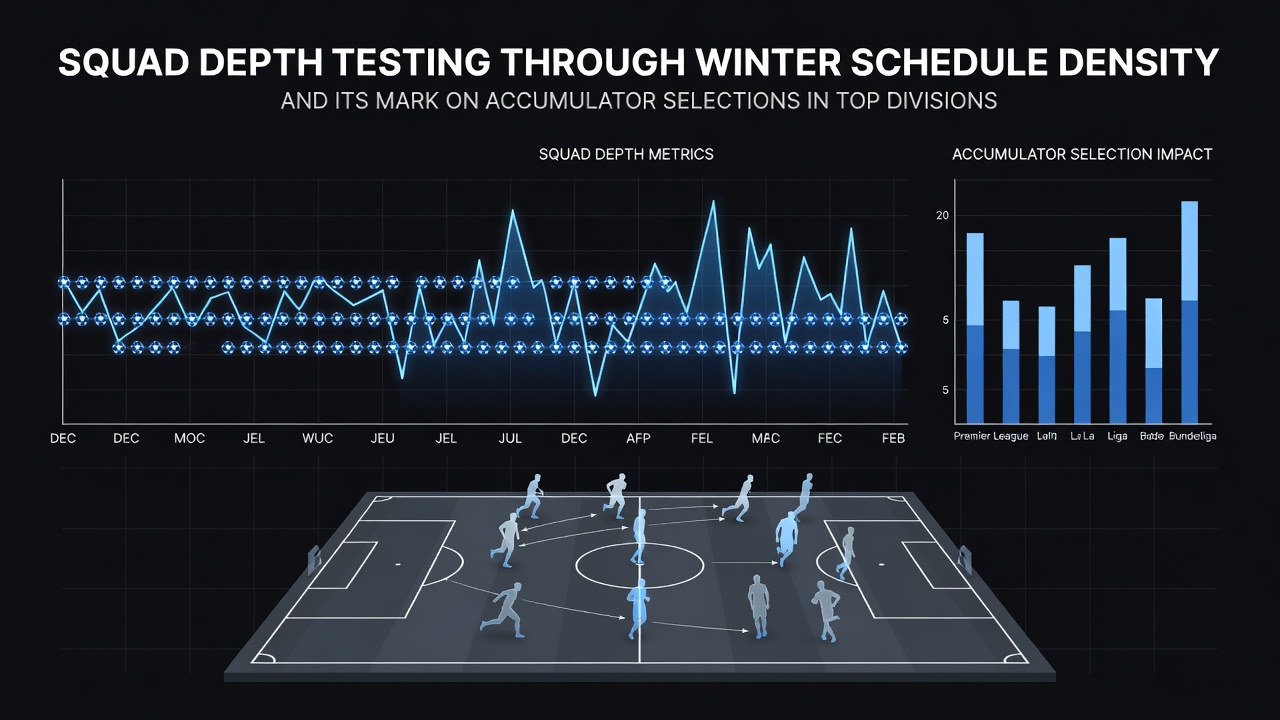
Winter months bring packed calendars to Europe's leading divisions, and this concentration of fixtures places direct strain on squad resources that in turn alters outcomes tracked by accumulator bettors. Leagues such as the Premier League, Bundesliga, La Liga and Serie A schedule multiple domestic and European ties between December and February, leaving limited recovery windows that test player availability and performance consistency. Data from match scheduling records show average top-flight teams contest nine to eleven games across an eight-week span in these periods, and clubs with shallower benches often see measurable drops in expected goal metrics during the second half of such sequences.
Fixture Clusters and Their Measurable Effects
Schedule density peaks around holiday periods when clubs play every three or four days, and analysts tracking historical results note increased variance in team totals for shots on target and clean sheets. Bundesliga records from recent winter blocks indicate sides outside the top six concede 0.4 more goals per game after three consecutive matches with under 72 hours rest, while Serie A data reveal similar patterns in midfield turnover rates. These shifts feed directly into accumulator modeling because selections relying on defensive solidity or over-2.5 goals encounter higher uncertainty when rotation becomes mandatory rather than optional.
Depth Metrics That Influence Selections
Clubs maintain squad depth through summer acquisitions and youth integration, yet winter testing exposes gaps when key players accumulate minutes without adequate rest. Researchers examining injury surveillance systems across UEFA competitions report that hamstring complaints rise 18 percent during December-January clusters compared with autumn schedules, and teams carrying two or more absences in the same position adjust formation more frequently. Accumulator builders therefore monitor bench strength indicators such as average age of substitutes and minutes played by rotation options, since these figures correlate with late-match goal concessions or unexpected clean sheets. One study of La Liga winter fixtures found that sides ranking in the upper quartile for squad rotation options secured 62 percent of available points in congested weeks, whereas lower-quartile teams dropped to 41 percent.

Rotation Patterns Across Divisions
Managers respond to fixture density by cycling players in wide areas and central midfield, and statistical tracking services document these changes through lineup submissions. Premier League clubs averaged 3.2 starting-eleven alterations per winter match in the 2025-26 season, with deeper squads showing smaller dips in pressing intensity after the 70-minute mark. In contrast, Serie A sides with fewer than five senior options at one position posted higher rates of tactical adjustments, including shifts to three-at-the-back systems that alter over/under lines for cards and corners. Observers note that accumulator markets adjust opening odds when lineups reveal multiple changes, particularly in matches involving sides returning from midweek European travel.
August 2026 pre-season planning already incorporates lessons from prior winter stretches, and federations continue to review calendar compression ahead of the expanded club competitions. Figures released by league organizers show that winter scheduling meetings now include explicit rest-day minimums for players involved in international windows, yet domestic density remains the primary variable affecting squad management decisions.
Accumulator Implications in Practice
Betting operators compile historical performance splits for congested periods, and these datasets allow selections built around teams with verified depth advantages. For instance, Bundesliga clubs that rotate at least four outfield positions across a four-game week maintain expected goal differentials closer to their season averages, while those unable to do so see measurable regression. Accumulator constructors therefore cross-reference squad lists against fixture lists released in late November, and they weight selections toward sides demonstrating consistent bench output in prior winter blocks. Data from the 2024-25 winter schedule demonstrated that teams with above-median squad depth indices covered their handicap lines 54 percent of the time in the final third of congested sequences, compared with 39 percent for shallower groups.
External analyses from sources such as the FIFA Technical Study Group and a joint report issued by the University of Groningen's sports science department further quantify how travel distance and match frequency compound depth requirements. These reports track recovery markers across multiple leagues and confirm that clubs with four or more players capable of covering the same role experience fewer performance drops when schedules tighten.
Conclusion
Winter schedule density continues to serve as a laboratory for squad depth evaluation, and the resulting performance data feed directly into accumulator frameworks used across top divisions. Clubs that maintain versatile options and manage minutes effectively produce more stable statistical profiles during these stretches, while those lacking breadth encounter greater outcome variability. Observers tracking both on-pitch metrics and pre-match lineup signals therefore treat winter blocks as distinct modeling periods rather than extensions of regular-season trends, and this separation refines selection criteria for accumulators built around Europe's leading competitions.