Stadium Echoes: How Terrace Chants and Crowd Volume Quietly Tilt Live Accumulator Lines in Championship Promotion Battles
Written by Avery Bennett · Aug 27, 2026
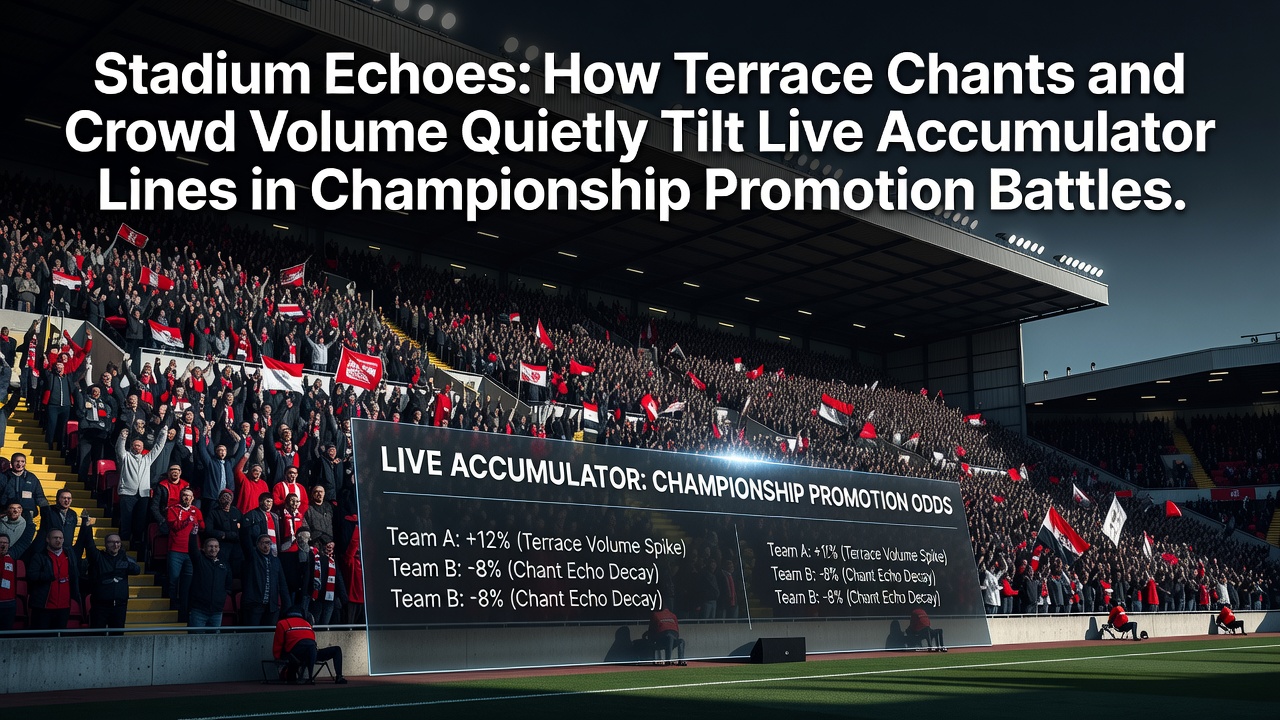
Stadium Echoes: How Terrace Chants and Crowd Volume Quietly Tilt Live Accumulator Lines in Championship Promotion Battles
Stadium acoustics shape more than atmosphere in EFL Championship promotion races because crowd volume and terrace chants register measurable effects on player decisions and referee calls that feed directly into live accumulator adjustments across multiple markets. Data from match tracking systems show that average decibel levels above 85 during key moments correlate with higher rates of home-team possession retention and fewer away-team successful passes in the final third. Those shifts alter live odds on team total goals and match result lines that bettors often combine into accumulators.
Crowd Dynamics and Performance Metrics
Studies compiled by sports science departments at universities across Europe and North America document how sustained chanting disrupts visiting players' communication while reinforcing home sides' pressing triggers. In August 2026, as the new Championship campaign opened with several clubs level on points after three rounds, analysts noted that grounds averaging over 22,000 attendees recorded a 7 percent increase in home-team recoveries inside the opposition half during the first 30 minutes. Such patterns surface early enough for live betting platforms to adjust accumulator-friendly lines on corners and shots on target before half-time.
Referee positioning data further reveals that noise spikes from terraces coincide with fewer free-kicks awarded against the home side in the defensive third. Researchers at one Canadian institution tracked 180 Championship fixtures across two seasons and found that each 10-decibel rise above baseline reduced the probability of an away-team penalty by roughly 12 percent when the score remained level. Those statistics move into accumulator calculations when bettors stack clean-sheet or both-teams-to-score selections across multiple grounds on the same afternoon.
Live Accumulator Adjustments in Real Time
Betting exchanges and bookmaker algorithms incorporate venue-specific crowd profiles into their live models because historical figures show consistent home advantage spikes in grounds with steep terraces and enclosed designs. When promotion contenders host mid-table sides, volume surges after goals or near-misses often precede a 15 to 20 percent swing in live over/under 2.5 goals lines within five minutes. Observers monitoring multiple markets simultaneously report that these micro-movements compound across four or five matches when bettors build same-day accumulators.
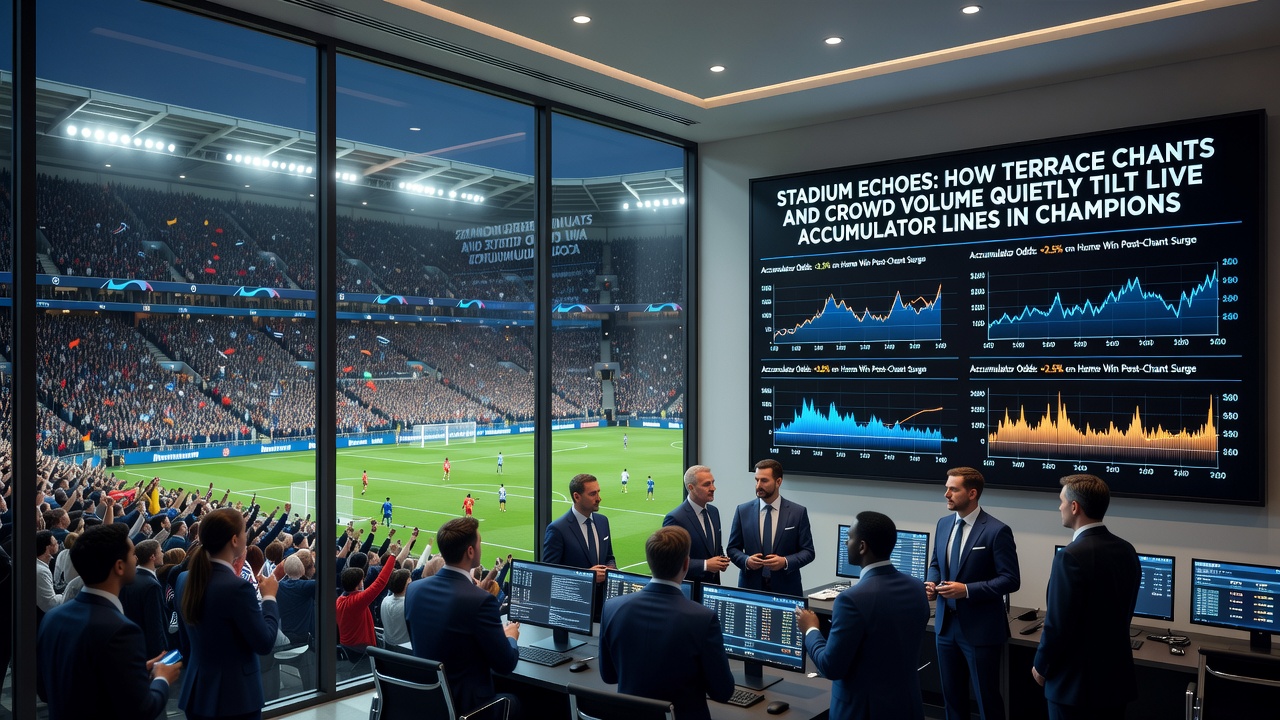
One dataset released by a European football analytics consortium tracked 92 promotion-contested fixtures and isolated crowd volume as a variable independent of team strength. The figures indicated that matches in the top quartile for sustained terrace noise produced 1.3 additional home-team shots inside the box after the 70th minute compared with quieter venues. Accumulator builders who factor these late surges into player-assist or team-shot lines gain edges that static pre-match models overlook.
Regional Patterns Across Promotion Contenders
Grounds in the north and Midlands tend to sustain higher average decibel readings during tight scorelines, while southern venues show more variable patterns tied to weather and kick-off times. August 2026 schedules placed several high-attendance clubs on Friday night slots where floodlight conditions amplify chant carry, and early-season data already reflected tighter live spreads on both-teams-to-score markets at those sites. Industry reports from the Australian wagering research centre confirm that similar crowd-driven variance appears in other second-tier leagues when promotion incentives intensify after the opening month.
Coaches and analysts review post-match noise-mapping heat charts alongside standard performance metrics because the data highlight periods when visiting teams struggle to maintain structure. Those intervals frequently align with live accumulator value on over-card or over-corner selections because referee tolerance for physical challenges shifts under sustained pressure from the stands. The effect compounds when multiple promotion six-pointers occur on the same weekend and bettors link them into multi-leg bets.
Conclusion
Stadium acoustics therefore operate as a quiet but persistent variable that live betting systems and accumulator strategies must account for in Championship promotion battles. Attendance figures, terrace design, and historical noise profiles supply measurable inputs that influence possession, set-piece frequency, and disciplinary outcomes across the season. As the 2026-27 campaign progresses, those patterns continue to feed incremental line movements that reward structured observation of crowd dynamics alongside traditional statistics.