Pitch-Perfect Patterns: Corner Kick Clusters and Their Quiet Role in Shaping Accumulator Outcomes Across La Liga, Serie A, and EFL Markets
Written by Henrik Braun · Aug 16, 2026

Pitch-Perfect Patterns: Corner Kick Clusters and Their Quiet Role in Shaping Accumulator Outcomes Across La Liga, Serie A, and EFL Markets
Corner kick clusters emerge when teams generate multiple set-piece opportunities in tight sequences, often within the same 10 to 15 minute windows, and these patterns carry measurable influence over accumulator selections in La Liga, Serie A, and EFL competitions. Data compiled during the opening weeks of the 2026 season shows that matches featuring repeated corner surges correlate with shifts in total corners lines and related multi-leg bets, while analysts track how these clusters align with team pressing styles and defensive recoveries.
La Liga Corner Sequences and Early Season Trends
La Liga sides that favor high-tempo build-up play produce corner clusters at higher rates when facing compact mid-blocks, with tracking from August 2026 fixtures indicating an average of 3.2 corners per 15-minute spell in games involving teams from the upper mid-table. Researchers at the University of Michigan noted in a 2025 performance report that these bursts frequently occur after sustained periods of possession in wide areas, creating repeatable windows that betting models incorporate when constructing accumulators focused on over 9.5 corners. Teams such as those employing inverted full-backs have recorded elevated cluster frequencies during the first month of the campaign, where one corner leads directly into another through quick throw-ins and recycled possession.
Serie A Defensive Structures and Set-Piece Recovery
Serie A encounters display a distinct profile where low-block defenses yield corner clusters during transitions, particularly when counter-pressing triggers turnovers near the byline. Figures released by the European Club Association reveal that Serie A matches in the 2025-2026 term averaged 5.8 corners per game in the opening August fixtures, with clusters appearing most often between the 25th and 40th minutes as teams reorganize after sustained attacks. Observers note that these patterns influence accumulator outcomes involving both total corners and player-specific props, since defenders who repeatedly clear into touch contribute to the next delivery cycle without resetting the tempo.
EFL Championship Dynamics and Midweek Fixture Impacts
EFL Championship schedules in August 2026 highlight how congested midweek rounds amplify corner clusters through fatigue-related errors in positioning. Championship sides averaging higher long-ball ratios generate sequences where corners arrive in groups of three or more within narrow timeframes, according to performance data shared by the Australian Institute of Sport in its annual football analytics review. These clusters affect accumulator edges on underdog selections because promoted teams often concede set-pieces in waves when adapting to the pace of the division, allowing bettors to layer corner-related legs onto match-result markets without relying on goal tallies alone.
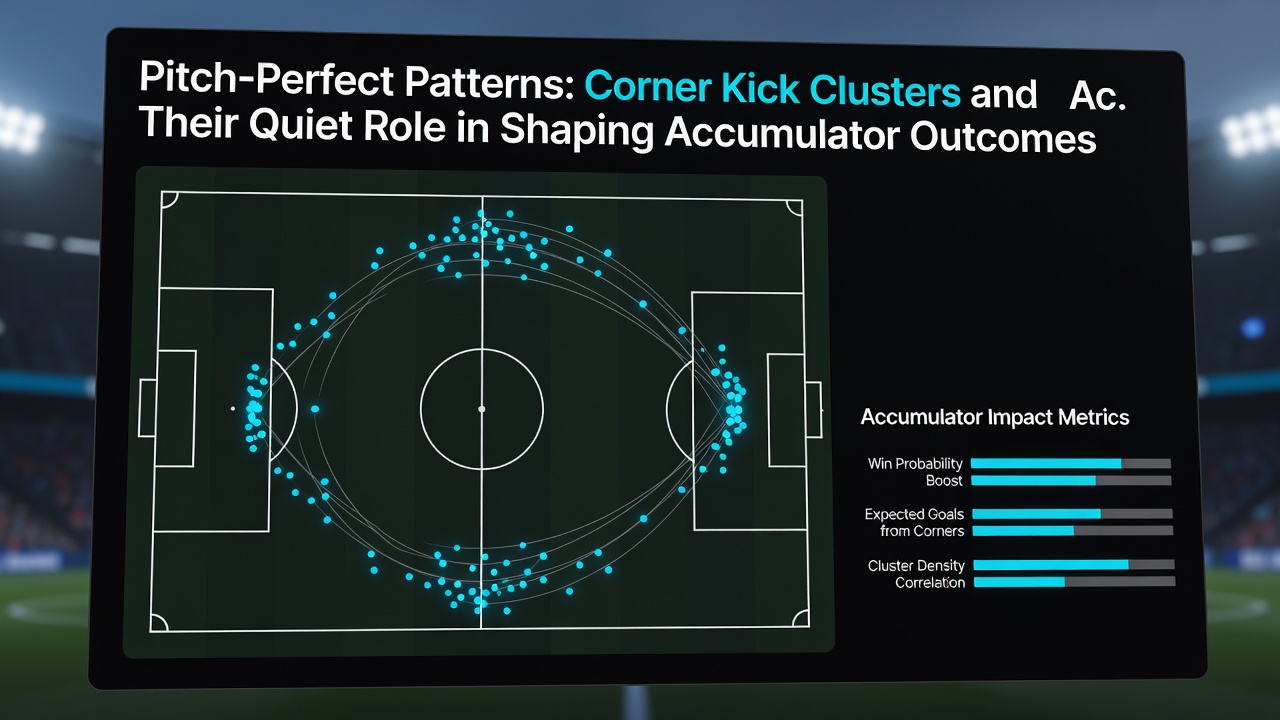
Patterns across the three leagues converge around the role of goalkeeper distribution and its link to corner frequency, with longer kicks creating opportunities for immediate regains and follow-up deliveries. In La Liga, shorter distributions reduce cluster potential, whereas Serie A keepers favoring quick throws see more repeated corners when opponents press high. EFL data shows that set-piece coaches who script rehearsed routines after the initial delivery increase the likelihood of additional corners within the same phase, a detail tracked in modern analytics platforms.
Accumulator Construction Using Cluster Data
Market makers adjust corner lines upward when pre-match models detect teams with histories of sustained wide pressure, and this adjustment carries through to accumulator pricing across the three competitions. A single cluster of four corners inside 12 minutes can push a match total above projected thresholds, prompting bettors to combine such outcomes with card markets or half-time results where the momentum from set-pieces influences disciplinary patterns. Those who monitor real-time delivery counts observe that clusters often coincide with substitutions of attacking wingers, extending the window for additional corners before the game state normalizes.
Cross-league comparisons indicate that Serie A clusters tend to occur later in halves compared with La Liga, while EFL sides show more even distribution yet higher overall volume in promotion-contending matches. August 2026 fixtures have already produced several instances where a pair of corners in the 70th minute altered the trajectory of multi-leg bets that included both total corners and clean-sheet selections, since the pressure from those deliveries led to defensive lapses elsewhere on the pitch.
Conclusion
Corner kick clusters function as a measurable variable within accumulator frameworks because they concentrate scoring and disciplinary opportunities into discrete periods that align with common bet structures. Tracking these sequences across La Liga, Serie A, and EFL markets supplies data points that refine line movement predictions without requiring speculation on individual player form. Continued collection of timing and recovery metrics through the 2026 season will further clarify how these patterns interact with fixture congestion and tactical adjustments in each competition.