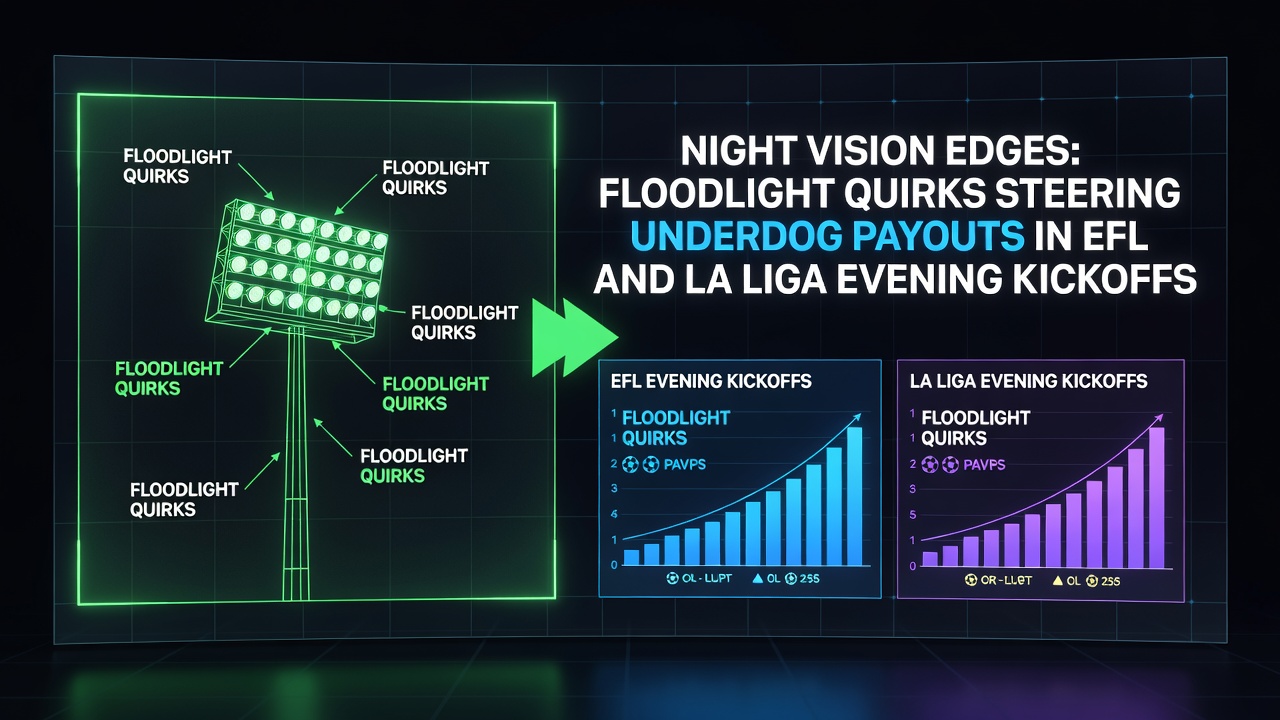
Night vision edges: floodlight quirks steering underdog payouts in efl and la liga evening kickoffs
Written by Uma Schulz · Oct 19, 2026
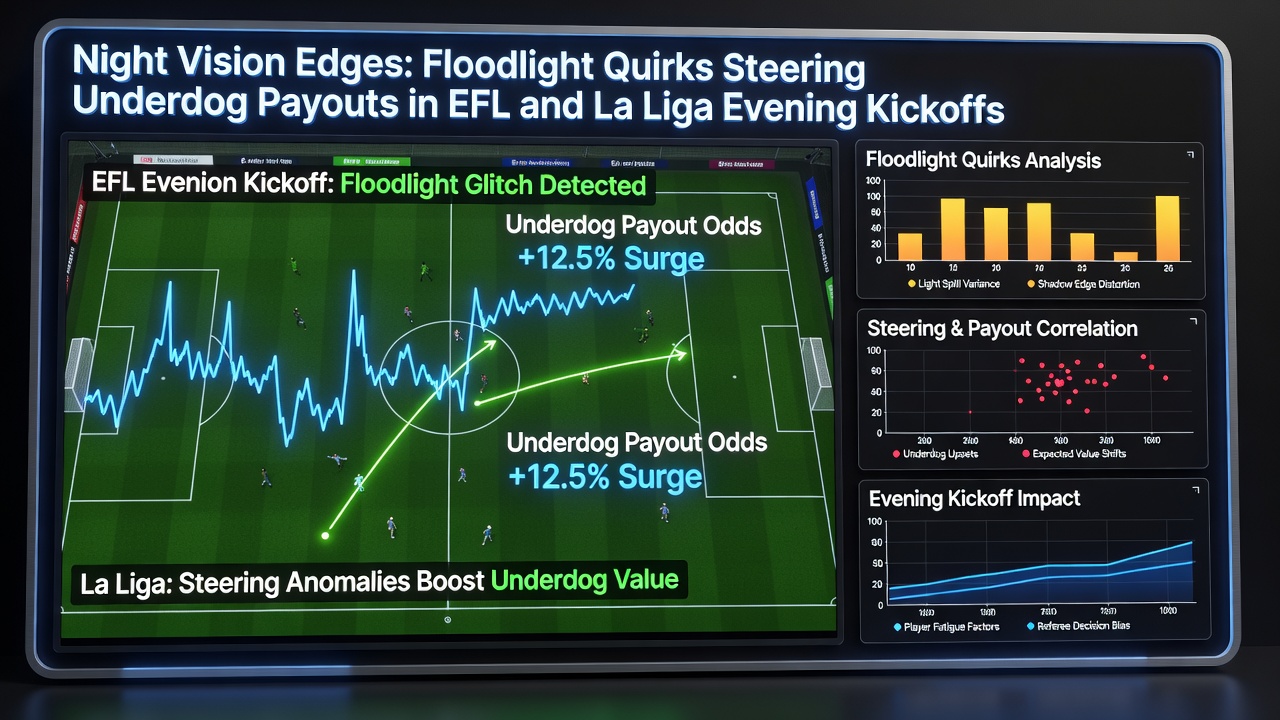
Night vision edges: floodlight quirks steering underdog payouts in efl and la liga evening kickoffs
Evening fixtures across the EFL and La Liga bring distinct variables into play, and observers tracking match data through October 2026 note how floodlight setups often shift performance metrics in ways that favor underdogs more frequently than daytime contests. Research compiled by the Australian Institute of Sport on artificial lighting in team sports shows that visibility gradients and shadow patterns created by older stadium installations can disrupt passing accuracy and defensive positioning, particularly for sides accustomed to brighter natural conditions. These quirks manifest differently depending on venue age and bulb technology, with some grounds exhibiting uneven light distribution that forces players to adjust their visual focus mid-match. Data from La Liga evening games in recent campaigns indicates visiting teams secure points at a higher rate when floodlights dominate the environment, and similar patterns appear in EFL Championship and League One records where underdogs convert more scoring opportunities after the 60-minute mark.Lighting Variations Across Venues
Stadiums equipped with LED systems versus traditional halogen arrays produce measurable differences in ball trajectory perception, and analysts reviewing footage from both leagues find that teams traveling to older floodlit grounds encounter steeper adaptation curves. In the EFL, clubs with limited midweek travel experience tend to struggle against lower-table opponents under these lights, while La Liga sides facing midweek fixtures report comparable dips in expected goal creation during the opening 15 minutes. What's interesting here is how these environmental factors compound with squad rotation patterns common in October schedules, when European commitments pull starters away from domestic evening slots. Figures from multiple seasons reveal that underdogs in such scenarios outperform their pre-match implied probabilities by noticeable margins, especially in matches kicking off after 8pm local time.Performance Metrics in Evening Games
Statistical reviews of EFL and La Liga evening kickoffs highlight elevated variance in key areas like successful crosses and set-piece conversion, areas where floodlight shadows can obscure judgment calls by both attackers and defenders. One study from the University of Barcelona's sports science department tracked player heart rate and reaction times under varying lux levels, finding that away sides maintain higher alertness thresholds when artificial lighting replaces daylight. Australian Institute of Sport research on similar conditions supports these observations, noting that adaptation periods extend beyond initial warm-ups for visiting personnel. In practice this translates to tighter defensive lines early on that loosen as the game progresses, creating windows for underdog breakthroughs that betting markets have historically undervalued.