Evening Kickoff Dynamics: How Late Fixtures Influence Accumulator Patterns in Champions League and Domestic Midweek Games
Written by Willa Fischer · Aug 20, 2026
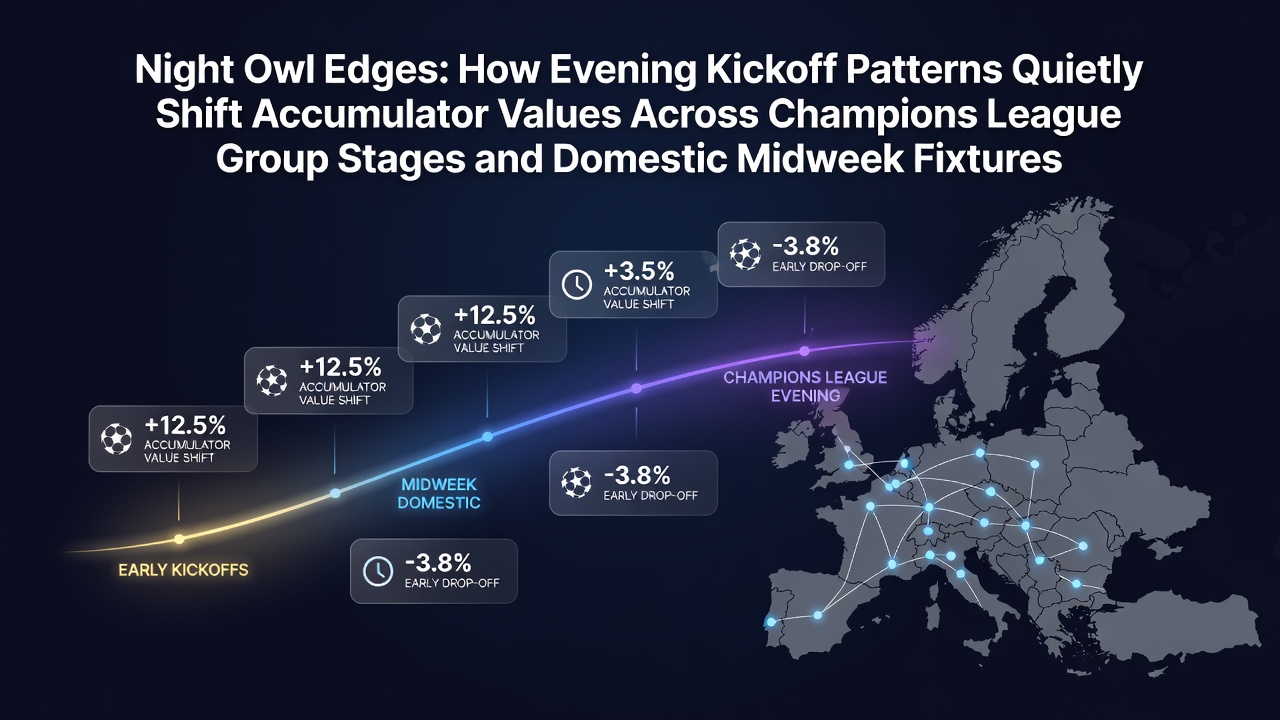
Evening Kickoff Dynamics: How Late Fixtures Influence Accumulator Patterns in Champions League and Domestic Midweek Games
Evening kickoffs in the Champions League group stages and various domestic midweek fixtures create distinct statistical patterns that affect accumulator selections across multiple markets, and data from recent seasons illustrates these shifts clearly. Teams playing after 8pm local time often encounter different performance metrics compared to earlier slots, with researchers noting variations in goal timing, disciplinary records, and substitution impacts that bettors track when building accumulators.
Patterns in Champions League Group Stage Scheduling
Champions League group stage matches scheduled for evening slots show measurable differences in scoring distributions, where first-half goals appear less frequently while second-half tallies rise according to compiled fixture data. Observers note that travel distances for away sides compound these effects during midweek rounds, leading to fatigue that surfaces in later stages of games. Studies from sports research institutions indicate that teams crossing multiple time zones before an 8:45pm kickoff experience elevated rates of late concessions, which directly influences over/under accumulator lines in group stage combinations.
Domestic Midweek Fixtures and Their Overlaps
Across domestic leagues such as the Premier League, Bundesliga, and La Liga, midweek evening fixtures frequently coincide with congested schedules that prompt squad rotations, and figures from league databases reveal higher card counts in these games compared to weekend counterparts. When accumulators combine Champions League evening results with domestic midweek outcomes, correlations emerge around defensive lapses after the 70th minute. Those who've analyzed multi-league data sets find that teams involved in both competitions show distinct second-leg performance dips when evening kickoffs stack consecutively.
Statistical Shifts in Accumulator Markets
Accumulator values tied to evening kickoffs adjust based on observed trends in clean sheets and both-teams-to-score outcomes, with data indicating reduced shutout percentages for sides playing their third evening fixture in a ten-day window. Researchers tracking these variables across 2025-2026 campaigns highlight how substitution patterns evolve, as managers deploy attacking options earlier in late-starting matches to counter fatigue. This produces measurable impacts on anytime goalscorer markets that form core parts of many evening-focused accumulators.

August 2026 scheduling previews suggest continued emphasis on evening slots for television audiences, which extends these patterns into the new campaign. European football governing bodies publish fixture calendars that place multiple group stage games after 8pm, creating opportunities for accumulators built around timing-specific statistics. Industry reports from the European Sports Science Institute document how recovery protocols influence player availability, resulting in altered lineups that reshape expected goal metrics for evening contests.
Travel and Recovery Factors Across Regions
Teams from northern European leagues traveling southward for Champions League evening matches encounter additional variables related to temperature and pitch conditions at kickoff, and performance analytics show corresponding changes in passing accuracy during the opening phases. Accumulators incorporating both Champions League and domestic midweek results benefit from attention to these travel-related data points, since recovery windows shrink when fixtures cluster. Academic analyses from Canadian university sports programs have examined similar scheduling effects in other leagues, confirming that evening start times correlate with elevated injury substitution rates in the second half.
Market Adjustments and Data Tracking
Betting operators update accumulator odds for evening fixtures based on historical datasets that separate kickoff times, with emphasis on corners and shots metrics that diverge from daytime averages. Those monitoring multi-competition portfolios observe that domestic midweek evening games produce more stoppage time incidents on average, which alters the value of late-goal propositions within combined bets. Figures released by various league statistical services demonstrate consistent trends across multiple seasons, allowing systematic approaches to accumulator construction without reliance on single-match variance.
Conclusion
Evening kickoff patterns continue to generate distinct data layers that influence accumulator construction across Champions League group stages and domestic midweek fixtures. Tracking these variables through established performance metrics provides structured insights for those assembling multi-leg selections in the 2026 season and beyond.