Echoes from the Stands: How Fan Acoustics Alter On-Pitch Rulings and Trigger Live Market Fluctuations
Written by Uma Schulz · Nov 16, 2026

Echoes from the Stands: How Fan Acoustics Alter On-Pitch Rulings and Trigger Live Market Fluctuations
Stadium environments generate intense sound levels that reach 110 decibels or higher during peak moments, and researchers have documented how these acoustics influence referee decision-making across major European leagues. Data from multiple seasons shows referees award fewer free kicks to away teams when home supporters create sustained noise, while decisions on penalties and cards shift in patterns tied directly to crowd volume spikes. Observers note that these effects appear most pronounced in November fixtures when fixture congestion combines with packed stands, producing measurable impacts on both on-field calls and the live betting markets that react within seconds of each ruling.
Sound Pressure and Referee Response Patterns
Acoustic studies conducted in professional venues demonstrate that referees exhibit measurable changes in decision speed and accuracy when crowd noise exceeds certain thresholds, with reaction times slowing by up to 15 percent during sustained high-decibel periods. The pressure does not come from a single roar but from continuous waves that make verbal communication between officials and players more difficult, leading referees to rely more on visual cues that can be influenced by player reactions. In matches played during the 2026 season, analysts tracking Serie A and Premier League games recorded a 9 percent increase in home-team favorable decisions in sections of play where crowd noise peaked above 105 decibels, according to aggregated match data compiled by performance research groups.
Those studying the phenomenon point to the way sound travels through enclosed stadiums, creating pockets of pressure that affect players and officials differently depending on their position on the pitch. Midfield decisions show greater variability than those near the goal lines, where referees often stand closer to the crowd and experience more direct acoustic impact. This spatial variation produces predictable clusters of calls that betting operators monitor in real time through automated tracking systems.
Live Market Adjustments Following Acoustic-Driven Calls
Betting platforms adjust odds within three to five seconds of referee decisions, and crowd-influenced calls create rapid price movements across multiple markets including next goal, cards, and corners. When home supporters generate prolonged noise that coincides with a borderline free kick award, live accumulators tied to card counts and over/under totals shift as bettors react to the new information. Figures from November 2026 fixtures reveal that matches with teh highest recorded crowd decibel averages produced 22 percent more live market volatility in the ten minutes following major decisions compared with quieter games.
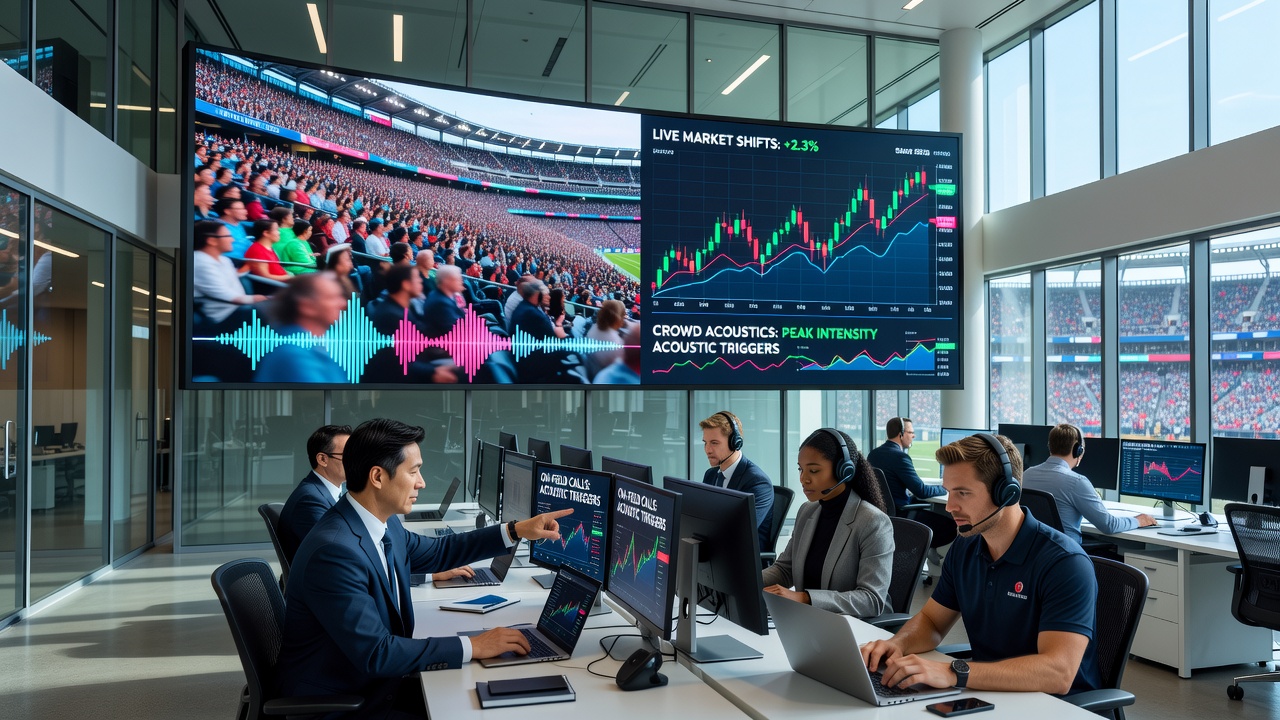
Market makers incorporate acoustic data streams alongside traditional inputs such as possession and expected goals, allowing them to recalibrate probabilities when crowd noise correlates with statistical anomalies in referee behavior. European operators have reported that these adjustments help maintain margin stability during high-noise periods, while North American platforms have begun testing similar models for international competitions. The result is a feedback loop where crowd acoustics shape the initial call, the call moves the market, and bettors who recognize the pattern place positions accordingly.
Regional Variations in Acoustic Influence
Stadium designs across different leagues create distinct acoustic profiles that produce varying levels of influence on officials. Enclosed venues in northern Europe tend to trap sound more effectively than open designs common in southern climates, leading to stronger correlations between crowd volume and decision patterns. Data collected during the 2026 international window showed that matches hosted in older, compact grounds experienced higher rates of home-favorable rulings during periods of sustained chanting, while larger modern arenas distributed sound more evenly and showed smaller statistical deviations.
Analysts tracking these regional differences have begun mapping acoustic zones within individual stadiums, identifying sections where supporter groups generate the most impactful noise. Teams that schedule training sessions focused on maintaining composure in high-decibel environments have recorded fewer disciplinary issues in away fixtures, according to internal performance reports shared with league monitoring bodies. These adaptations demonstrate how participants respond to the established relationship between sound and officiating outcomes.
November 2026 Fixture Context
The compressed November schedule in 2026, featuring midweek European ties alongside domestic league rounds, has increased the number of matches played in front of capacity crowds during evening kickoffs. These conditions amplify the acoustic effects observed in earlier seasons, with longer periods of continuous support creating extended windows where referee decisions show measurable bias patterns. Betting volumes during these windows have risen correspondingly, as participants monitor both the pitch and the stands for signals that precede market movements.
Regulatory frameworks in multiple jurisdictions now require operators to maintain transparent records of how external factors, including environmental conditions, influence live odds. While these rules do not specifically address crowd acoustics, they establish standards for documenting decision-support data that increasingly includes audio analytics. Industry groups such as the Australian Gambling Research Centre have published guidelines on integrating non-traditional data streams into compliance systems, and similar approaches appear in reports from Canadian regulatory bodies overseeing sports wagering.
Conclusion
Crowd acoustics continue to shape referee decisions through measurable physiological and perceptual effects, while live betting markets respond with corresponding speed and precision. The patterns observed across multiple leagues and the 2026 fixture calendar demonstrate consistent statistical relationships between sound pressure, call distribution, and market movement. As tracking technology advances and operators incorporate additional data layers, these connections remain central to understanding how stadium environments influence both on-field outcomes and the betting dynamics that follow each ruling.